










The power to find your true self is within you!
Have you ever felt like you’re living someone else’s life? Like you’re going through the motions without truly understanding who you are or what you want?
If so, you’re not alone. Today, I want to share with you the steps you can take to create your own personal journey to self-discovery.
The Importance of Self-Discovery
Self-discovery is more than just a trendy buzzword.
It’s a crucial process that allows you to understand your true self, your values, and your desires.
When you know yourself deeply, you can make decisions that align with your authentic self, leading to greater fulfillment and success in all areas of life.
Steps to Create Your Own Self-Discovery Journey
Start with Self-Reflection
The first step in any self-discovery journey is to look inward. I know this is not an easy thing to do, but self-discovery comes from within.

You will need to take time to reflect on your past experiences, your current situation, and your future aspirations.
This is an exercise I have been doing for a long time. It has taken me a few tries because I was a people pleaser, so I always tended to put everyone before me. This exercise will require you to put yourself first – put yourself on that pedestal you have placed everyone else on – now is your turn to shine and dig deep to start discovering who you truly are.
I want you to stop and think about YOU for a minute – no one else – just you. I want you to reflect on yourself – if there was no one else or anything else – what would be the thing that would light your soul on fire?
Here are a few questions you can ask yourself:
- What makes me truly happy?
- What are my core values?
- What do I want to achieve in life?
In order to find your true self, you will have to dig deep and create your inner work.
Embrace Journaling
Journaling is the practice of regularly writing down your thoughts, feelings, experiences, and observations.
It’s a private, judgment-free space where you can explore your inner world without fear or constraint.

How Journaling Aids Self-Discovery:
- Emotional Clarity: Writing helps you process and understand your emotions better.
- Pattern Recognition: Over time, you’ll start to notice recurring themes in your thoughts and behaviors.
- Problem-Solving: Journaling can help you work through challenges by providing a new perspective.
- Goal Setting: It’s a great place to articulate and refine your personal and professional goals.
- Self-Awareness: Regular journaling increases your understanding of your values, desires, and motivations.
Steps to Identify Your Patterns Through Journaling:
- Consistency is Key: Try to journal daily, even if it’s just for a few minutes.
- Review Regularly: Set aside time each month to read through your entries.
- Look for Themes: Notice recurring topics, emotions, or situations.
- Track Your Mood: Consider using symbols or colors to represent different emotions.
- Be Honest: The more truthful you are, the more insightful your journaling will be.
Personal Journal Prompts to Get You Started:
- What made me feel truly alive today?
- If I could change one thing about myself, what would it be and why?
- What’s a fear I’m currently facing, and how can I overcome it?
- Describe a moment when I felt completely like myself. What was happening?
- What’s a belief I hold that might be limiting me?
- If I had unlimited resources, what would I do with my life?
- What’s a compliment I’ve received that really resonated with me? Why?
- Describe my ideal day from start to finish.
Remember, there’s no “right” way to journal.
You might prefer a traditional pen and paper, a digital app, or even voice recordings. The key is to find a method that feels comfortable and sustainable for you.
In my own experience, journaling has been a cornerstone of my self-discovery journey. It’s helped me uncover hidden aspirations, work through complex emotions, and gain clarity on my personal values.
Through consistent journaling, I’ve been able to identify patterns in my thinking and behavior that were holding me back and take steps to change them.
So, grab yourself a notebook or open a new document on Google Docs, and start exploring your inner world today.
You might be surprised at what you discover about yourself.
Try New Experiences
Stepping out of your comfort zone and trying new things can reveal aspects of yourself you never knew existed.
Let’s talk about one of the most exciting parts of self-discovery: trying new experiences.

As someone who’s taken the leap into unfamiliar territories (like starting a podcast!), I can tell you firsthand that stepping out of your comfort zone is where the magic happens.
Why New Experiences Matter
Trying new things isn’t just about having fun (although that’s a great bonus!). But it’s about:
- Discovering hidden talents: You might be surprised at what you’re capable of!
- Challenging your assumptions: About yourself and the world around you.
- Building confidence: Each new experience conquered is a boost to your self-esteem.
- Expanding your perspective: New experiences often lead to new ways of thinking.
- Finding your passion: Sometimes, what lights you up is something you’ve never tried before.
My Personal Journey
I remember when I first decided to start a blog about personal finance – The Budget Academy. The thoughts alone were terrifying! I doubted myself, wondering if I had anything valuable to share.
Keep in mind that I have a degree in the financial field, and I have helped many people with their personal finances for years, but this was a limited belief that I had to overcome, and I am so happy I took those steps! It has been a truly rewarding feeling.
So you know what? Taking that leap to start the blog opened up a whole new world for me. It not only helped me connect and help some amazing people but also allowed me to show my knowledge and passion to others who needed my help one way or another.
How to Embrace New Experiences
- Start small: You don’t have to climb Everest. Maybe try a new cuisine or take a different route to work.
- Say “yes” more often: When opportunities arise, challenge yourself to say yes instead of defaulting to no.
- Schedule it: Put “try something new” on your calendar regularly.
- Embrace the discomfort: Remember, growth happens outside your comfort zone. Once you do it once, it no longer is a discomfort.
- Reflect on each experience: What did you learn? How did it make you feel?
Journal Prompts to Explore New Experiences
- If I could try anything without fear of failure, what would it be?
- What’s a skill I’ve always admired in others but never tried myself?
- What’s a place I’ve always wanted to visit but haven’t yet? Why?
- If I could switch careers for a day, what job would I try?
- What’s a hobby that intrigues me but I’ve been hesitant to start?
- What’s the most exciting thing I’ve done in the past year? How did it make me feel?
- If I had an extra hour each day, how would I spend it?
- What’s a fear I’d like to overcome? What small step could I take towards facing it?
Discovering Your Passion and Purpose
Finding your passion and purpose often comes from trying new things. Here are some prompts to help you explore:
- When do I lose track of time because I’m so engrossed in what I’m doing?
- What topics do I love learning about or discussing with others?
- If I could solve one problem in the world, what would it be?
- What activities make me feel most alive and energized?
- When have I felt most proud of myself? What was I doing?
Remember, your journey is unique to you. What lights you up might be completely different from what excites me or anyone else. And that’s the beauty of it!
Embrace the exploration, be patient with yourself, and enjoy the process of uncovering your passions.
Every new experience, whether it’s a hit or a miss, is a step towards understanding yourself better.
So, what new thing will you try today? Your next adventure in self-discovery is waiting for you. Go for it – I’m cheering you on!
Set Personal Boundaries
As you discover more about yourself, it’s important to establish and maintain personal boundaries.

Boundaries are the guidelines and expectations we set for ourselves about how we want to be treated by others. They’re not just about saying “no” to others but also about saying “yes” to what truly matters to you.
Boundaries are essential for maintaining our mental health, self-respect, and authenticity.
What Are Personal Boundaries?
Personal boundaries are guidelines, rules, or limits that a person creates to identify reasonable, safe, and permissible ways for other people to behave towards them.
They also determine how we respond when someone steps beyond those limits.
Dr. Henry Cloud, in his book “Boundaries“, defines them as:
“Boundaries define us. They define what is me and what is not me. A boundary shows me where I end and someone else begins, leading me to a sense of ownership. Knowing what I am to own and take responsibility for gives me freedom.”
Types of Boundaries
Understanding the different types of boundaries is important for effective self-discovery and personal growth.
Boundaries aren’t one-size-fits-all; they vary depending on the context and your individual needs.
By recognizing these distinct categories, you can better identify areas in your life that may require stronger limits.
Here are the five main types of boundaries that contribute to a well-rounded sense of self and healthy relationships with others:
- Physical: Personal space, privacy, and body autonomy
- Emotional: Separating your feelings from others
- Time: How you choose to use your time
- Intellectual: Your thoughts and ideas
- Material: Your possessions and money
Why Are Boundaries Important?
Boundaries are the invisible lines that define where you end and others begin.
They’re not just arbitrary rules; they’re essential safeguards for your mental and emotional well-being.
Understanding the importance of boundaries is crucial for maintaining healthy relationships, both with yourself and others.
When you establish and maintain clear boundaries, you’re essentially creating a framework for respect, self-care, and personal growth.
Here’s why setting and respecting boundaries is so vital for your journey of self-discovery and overall life satisfaction:
- They protect your self-esteem and self-respect
- They conserve your emotional energy
- They help you develop a strong sense of self
- They promote independence and autonomy
- They allow you to practice self-care
How to Set Clear Expectations with Boundaries
Setting boundaries is one thing, but communicating them effectively is another important skill in your self-discovery journey.
Clear expectations are the foundation of healthy relationships, both personal and professional. When you articulate your boundaries with clarity and confidence, you create a framework for mutual respect and understanding.
This process isn’t about building walls; it’s about creating transparent guidelines that allow you to engage with others authentically while protecting your well-being.
Here are strategies to help you set and communicate your boundaries effectively.
- Be Clear and Direct: Communicate your boundaries clearly and without ambiguity.
- Be Consistent: Enforce your boundaries consistently.
- Use “I” Statements: Express your needs in terms of your feelings.
- Be Prepared for Pushback: Some people may resist your new boundaries.
- Practice Self-Reflection: Regularly assess if your boundaries are serving you well.
Implementing Boundaries in Daily Life
Understanding the concept of boundaries is one thing, but putting them into practice in your everyday life is where real change happens.
Implementing boundaries isn’t about creating rigid rules or walls; it’s about fostering healthier interactions and protecting your well-being.
This process requires consistency, self-awareness, and, sometimes, courage.
As you begin to implement boundaries, you may face challenges or resistance, both from others and from within yourself.
However, with patience and persistence, you’ll find that well-implemented boundaries can transform your relationships and significantly enhance your journey of self-discovery.
Here are some practical ways to integrate boundaries into your daily routine to help you create a life that aligns with your true self.
- Start Small: Begin with a boundary that feels manageable
- Practice Saying No: Immediately decline requests that violate your boundaries
- Communicate Openly: Express your needs and limits to others
- Respect Others’ Boundaries: Model the behavior you expect from others
- Be Flexible: Adjust your boundaries as needed, but don’t compromise your core values
Journal Prompts for Discovering Your Personal Boundaries
Self-reflection is a powerful tool for understanding and establishing your personal boundaries.
Journaling, as mentioned earlier, can be an invaluable practice in your journey of self-discovery.
These prompts are designed to help you delve deeper into your thoughts, feelings, and experiences, uncovering areas where you might need to set or strengthen boundaries.
When you explore these questions, you’ll gain better insights into your comfort levels, values, and needs.
Remember, there are no right or wrong answers – the goal is to foster honest self-reflection and awareness.
Take your time with each prompt, allowing yourself to explore your responses fully.
Let’s begin this introspective journey to better understand and define your personal boundaries.
- In what situations do I often feel resentful or taken advantage of?
- What are three non-negotiable aspects of my life that I need to protect?
- When was the last time I said “yes” when I really wanted to say “no”? Why did I do that?
- What does respect look like to me in my relationships (personal and professional)?
- What are my core values, and how can I set boundaries to protect them?
- In what areas of my life do I feel I have the least control? How can I change that?
- What behaviors from others make me feel uncomfortable or disrespected?
- How do I want others to communicate with me when they have a problem or request?
- What personal space or alone time do I need to feel balanced and recharged?
- How can I better honor my own time and energy in my daily life?
Remember, setting and maintaining boundaries is an ongoing process. It’s okay to adjust them as you learn more about yourself and your needs.
The goal is to create a life that aligns with your values and supports your well-being.
As Dr. Cloud emphasizes:
“Boundaries are a part of self-care. They are healthy, normal, and necessary.”
When you implement personal boundaries, you’re taking a significant step towards self-discovery and creating a life that truly reflects your authentic self.
Believe in Yourself
Self-discovery requires courage and self-belief. It’s okay to let yourself be you.
In fact, it’s essential. Remember, there’s no one else quite like you in this world, and that’s your superpower.

When you believe in yourself, you trust your abilities, value your opinions, and have confidence in your decisions. When you believe in yourself, you’re more likely to take risks, pursue your passions, and live authentically.
Understanding Self-Belief
Self-belief is more than just positive thinking. It’s a deep-seated confidence in your inherent worth and capabilities.
This confidence doesn’t mean you’ll never face doubts or challenges, but it provides a foundation to face life’s obstacles.
The Power of Self-Trust
Trusting yourself is the first step towards believing in yourself.
It involves listening to your intuition, honoring your feelings, and having faith in your judgment.
When you trust yourself, you’re less likely to be swayed by others’ opinions or societal pressures.
Here are some journal prompts to guide you in your self-believing journey.
- Describe a time when you trusted your instincts and it paid off.
- What areas of your life do you find it easiest to trust yourself? Why?
- In what situations do you tend to doubt yourself the most?
Overcoming Self-Doubt
Self-doubt is a natural part of the human experience, but it shouldn’t dictate your life.
Recognizing and challenging your self-doubt is important for building self-belief.
Strategies for Challenging Negative Self-Talk:
- Identify the thought: Recognize when you’re having a self-doubting thought.
- Question its validity: Ask yourself if there’s actual evidence to support this negative belief.
- Reframe the thought: Replace the negative thought with a more balanced or positive one.
- Practice self-compassion: Treat yourself with the same kindness you would offer a friend.
Journal Prompts to help you overcome self-doubts:
- Write down three negative thoughts you often have about yourself. For each one, write a more balanced or positive alternative.
- Describe a recent situation where you doubted yourself. How would you reframe that situation now?
- What would you say to a friend who was experiencing the same self-doubt you often feel?
Identifying Limiting Beliefs
Limiting beliefs are negative thoughts about yourself that hold you back.
They often stem from past experiences or societal conditioning. Identifying these beliefs is the first step to overcoming them.
- What negative beliefs do you hold about yourself?
- Where do you think these beliefs originated?
- How have these beliefs limited you in the past?
Challenging Negative Self-Talk
The way you talk to yourself has a profound impact on your self-belief.
Learning to challenge and reframe negative self-talk can boost your confidence and self-esteem.
Here are some journal prompts to help guide you:
- Write down three negative thoughts you often have about yourself.
- For each thought, write a more balanced or positive alternative.
- How would your life be different if you believed these positive alternatives?
Cultivating Self-Confidence
Self-confidence is the outward expression of self-belief.
It’s about presenting yourself to the world with assurance and poise.
Self-confidence is an important component of believing in yourself and is essential for your journey of self-discovery. It’s the outward expression of your inner self-belief, manifesting as assurance in your abilities and decisions.
Cultivating self-confidence isn’t about becoming arrogant or dismissing your flaws; instead, it’s about recognizing your worth, embracing your strengths, and approaching challenges with a positive mindset.
When you focus on your accomplishments, set achievable goals, and practice self-compassion, you can gradually build and strengthen your self-confidence.
But remember, confidence is like a muscle – the more you exercise it, the stronger it becomes. As you grow more confident, you’ll find yourself more willing to take risks, express your authentic self, and pursue your dreams without hesitation.
Embracing Your Strengths
Recognizing and embracing your strengths is key to building self-confidence. Everyone has unique talents and abilities; acknowledging yours can boost your self-belief.
When you embrace your strengths, you cultivate self-confidence and discover your true self.
Everyone has unique talents and abilities, but often, we focus more on our weaknesses or compare ourselves to others.
By recognizing and appreciating your strengths, you allow yourself to leverage them in your personal and professional life.
Here are some prompts that can help you identify and embrace your strengths:
- List five of your personal strengths – identifying what you’re naturally good at or what others often compliment you on. These could be skills, personality traits, or even ways of thinking.
- How have these strengths helped you in the past? Look for opportunities to use them more often.
- How can you use these strengths more in your daily life?
Keep in mind that your strengths are what make you unique and valuable. Embracing them is not about bragging but about acknowledging and nurturing the best parts of yourself.
Setting and Achieving Goals
Setting and achieving goals is a powerful way to build self-confidence and propel your journey of self-discovery.
Start by identifying clear, specific objectives that align with your values and aspirations. Break these larger goals into smaller, manageable tasks to create a roadmap for success.
As you accomplish each step, no matter how small, celebrate your progress.
This process not only brings you closer to your desired outcomes but also reinforces your belief in your abilities.
The goal isn’t just about the end result; it’s about the growth and learning that occurs along the way. Each goal you set and achieve is a testament to your capabilities, helping you build a stronger sense of self and the confidence to tackle even bigger challenges in the future.
Here are some questions you can ask yourself to better guide you to achieve your goals – remember, start small so you don’t feel overwhelmed:
- What’s one goal you’d like to achieve in the next month?
- Break this goal down into smaller, actionable steps.
- How will achieving this goal impact your self-belief?
Trusting Your Intuition
Your intuition is a powerful tool for self-discovery and decision-making. Your intuition is the number one source you should rely on because you know yourself better than anyone else.
Intuition often manifests as physical sensations, emotions, or sudden insights.
Learning to trust and follow your gut feelings can lead to more authentic and fulfilling choices.
I highly encourage you to journal when you have a gut feeling about anything. When you use the power to write it down, it can guide you to a more precise answer when you start asking yourself questions about why you are having those feelings.
- Describe a time when you had a strong gut feeling about something.
- How does your body feel when you’re making a decision that feels right?
- In what areas of your life do you tend to ignore your intuition?
Acting on Your Intuition
Trusting your intuition means being willing to act on it, even when it goes against logic or others’ opinions.
Believing in yourself is a skill that can be developed over time. It requires patience, practice, and self-compassion.
You have permission to trust yourself, to value your opinions, and to believe in your capabilities. Your intuition and inner wisdom are powerful guides on your journey of self-discovery. Embrace them, and allow yourself to shine as your authentic self.
Be Aware of Your Surroundings
Your environment plays an important role in your journey of self-discovery and personal growth.
The people, places, and situations you surround yourself with can either nurture or hinder your authentic self.

Take a moment to assess your surroundings critically.
- Are the people in your life supportive and accepting of who you truly are?
- Does your environment encourage growth and self-expression?
Remember, it’s okay to distance yourself from relationships or situations that consistently drain your energy or make you feel like you can’t be yourself.
Seek out connections with those who accept and celebrate your authentic self.
Create spaces that inspire and energize you. By consciously shaping your environment, you’re creating a foundation that supports your journey of self-discovery and allows your true self to flourish.
Practice Self-Care and Well-being
Taking care of your physical and mental health is crucial for self-discovery.
Prioritize activities that nourish your body and mind, such as exercise, meditation, or hobbies you enjoy.

Taking care of yourself isn’t selfish; it’s necessary for maintaining the energy and positivity you need to explore your authentic self.
This involves setting boundaries, recognizing what drains your energy, and limiting time spent on those things.
Make sure you feel energized and surrounded by positive influences. Self-care can take many forms – from physical exercise and healthy eating to meditation and pursuing hobbies you enjoy.
Just keep in mind that you can’t pour from an empty cup. By prioritizing your well-being, you’re creating a strong foundation for personal growth and self-discovery.
As you take care of yourself, you’ll find you have more capacity to show up authentically in all areas of your life.
The Power of Self-Discovery
Self-discovery is not a destination but a lifelong journey. It’s about continually learning, growing, and evolving.
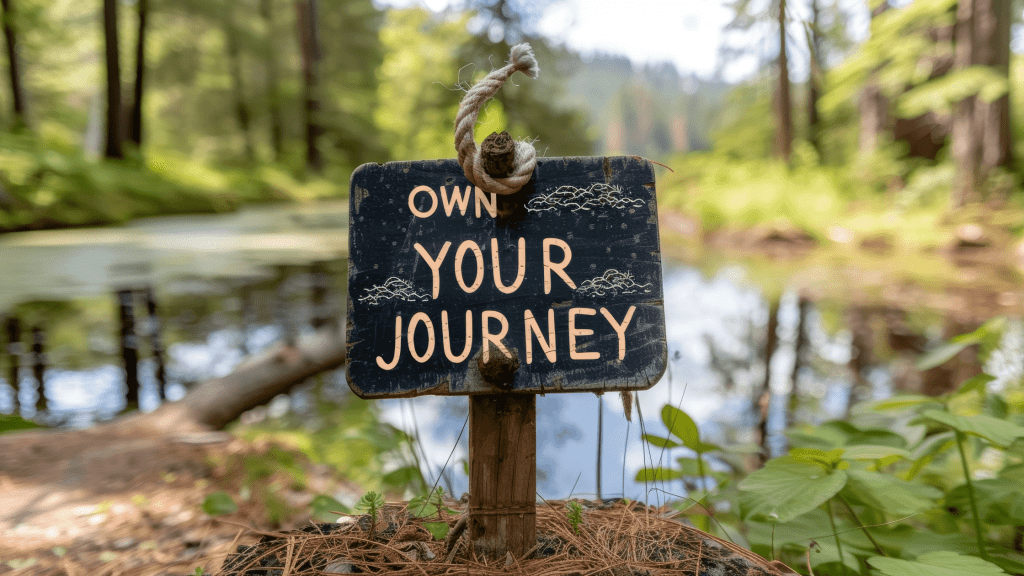
As you embark on this journey, you’ll likely find that you become more confident, make better decisions, and live a more authentic and fulfilling life.
In my own journey, self-discovery has been instrumental in helping me find my passion for helping others. It’s allowed me to set meaningful goals, establish healthy boundaries, and live a life that truly aligns with my values.
So, are you ready to start your self-discovery journey? It’s okay to take small steps. Start with a journal entry today, try something new tomorrow, or have a deep conversation with a friend.
Every step you take brings you closer to understanding and embracing your true self.
Your journey of self-discovery is uniquely yours. Embrace it, enjoy it, and let it guide you towards a more authentic and fulfilling life.




0 Comments